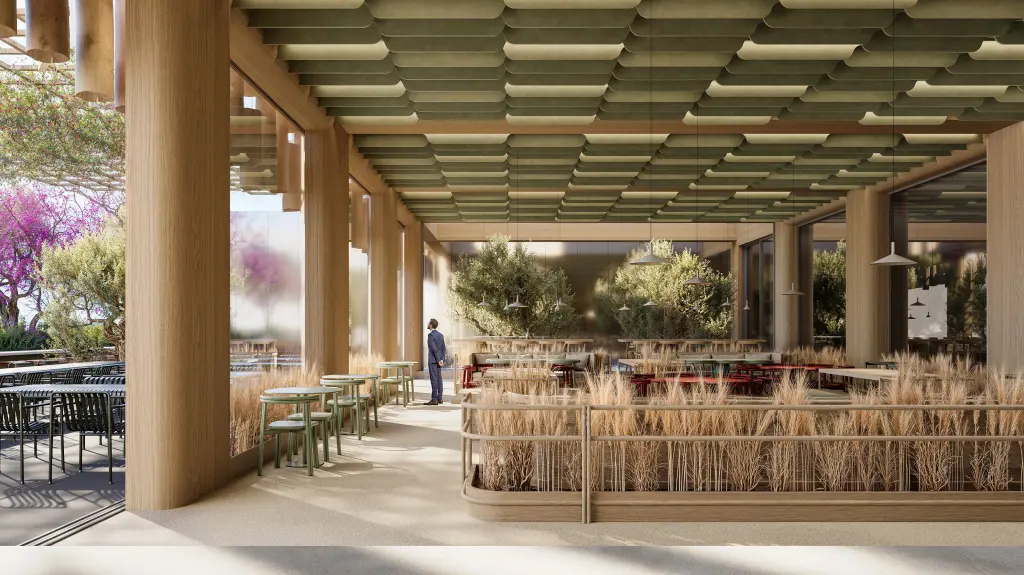
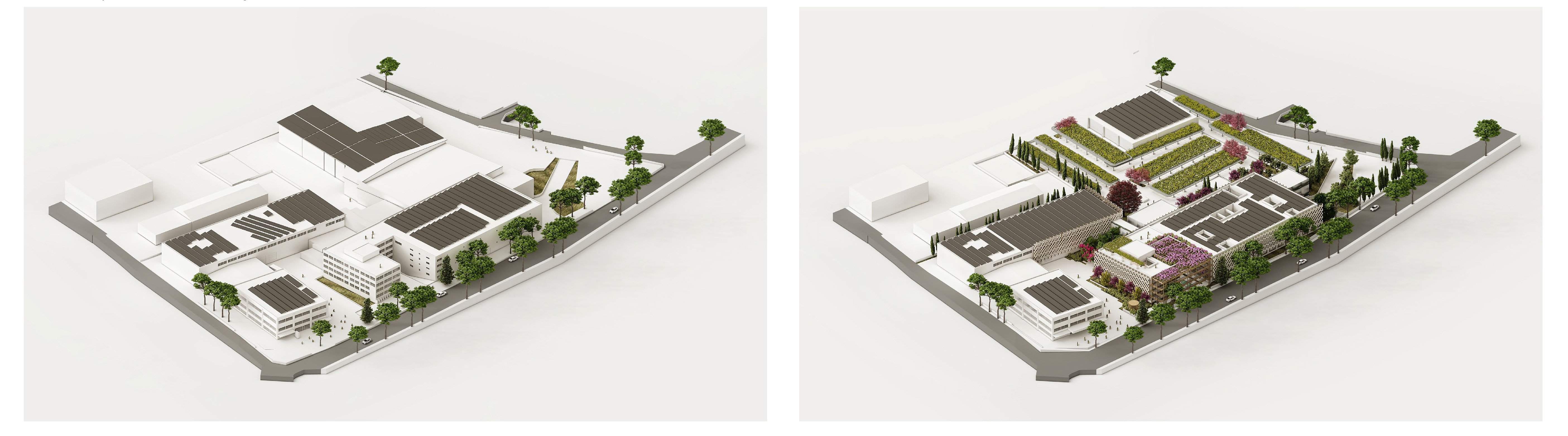
EXISTING SITUATION The study area is characterized by low thermal-comfort indices, as it is located in a peri-urban zone directly adjacent to the national highway, with elevated levels of pollution and noise, a high volume of vehicular traffic, and surrounding buildings that reflect long-wave radiation. Extensive hardscaped surfaces, insufficient shading, and minimal vegetation further intensify heat accumulation. In response, the architectural proposal aims to improve thermal comfort by enhancing shaded areas, increasing vegetation in combination with soft landscaping and water elements, reducing noise through vegetative filters along the southeast façades, and minimizing the overall environmental footprint of the complex. These strategies align with the UN Sustainable Development Goals and the tripartite methodology of sustainability, ensuring a holistic approach to environmental performance and well-being.
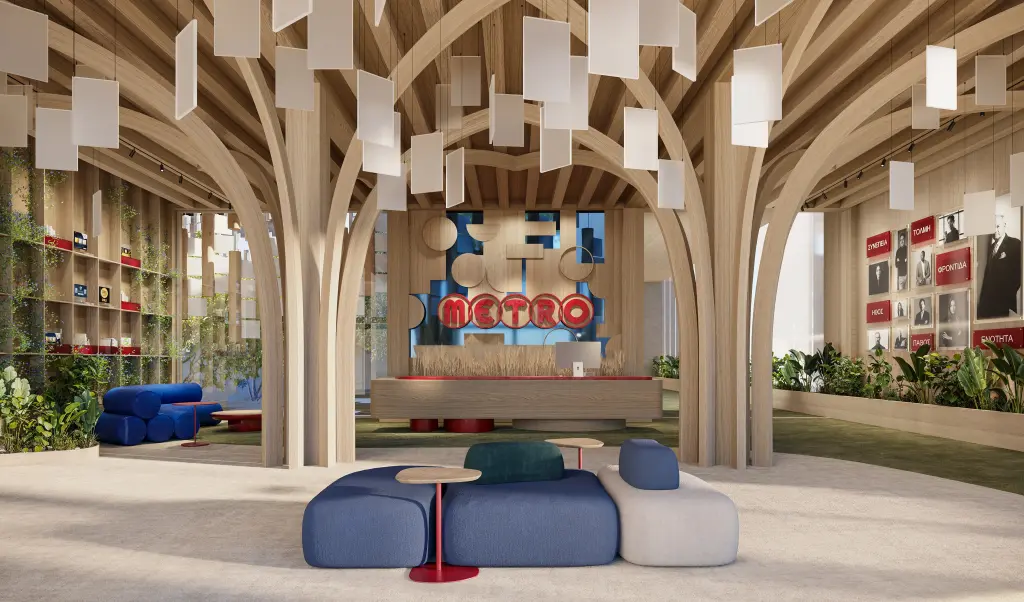
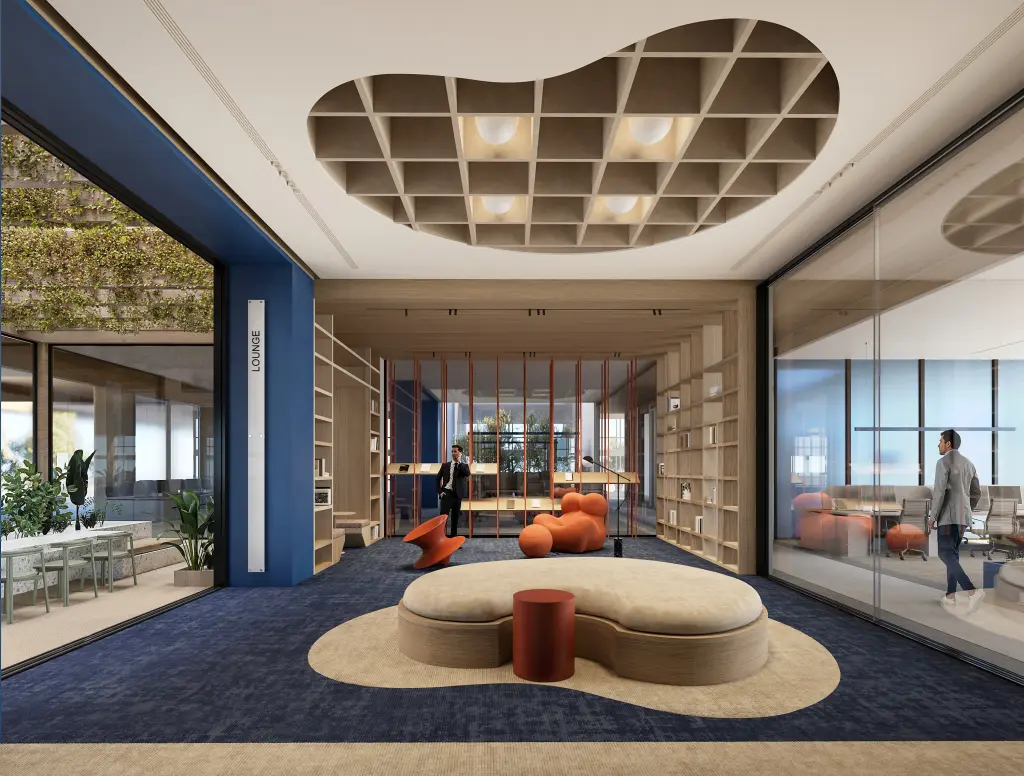
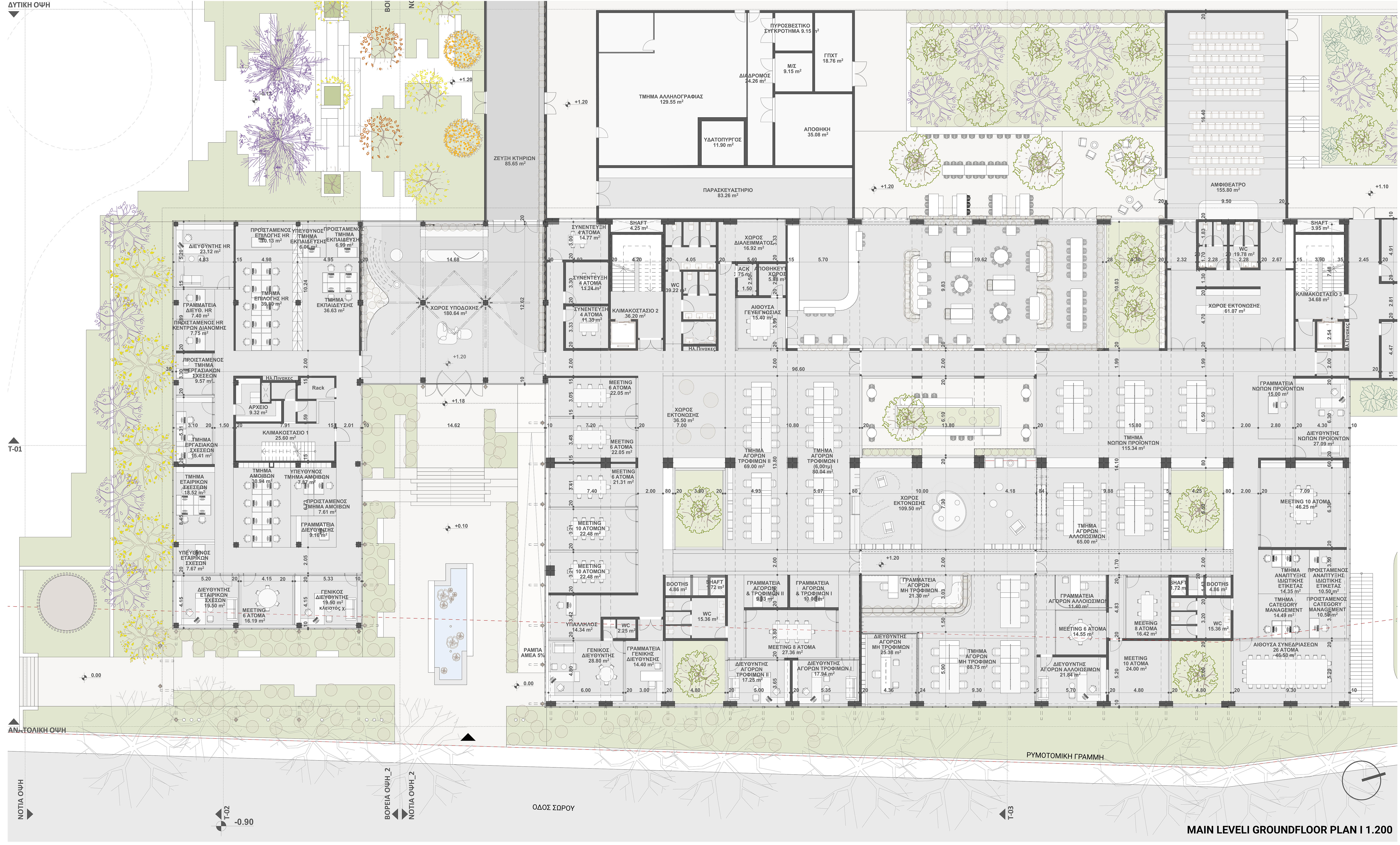
ARCHITECTURAL VISION & SUSTAINABILITY PRINCIPLES The vision of the architectural proposal is the creation of a bioclimatic office complex, fully integrated into the peri-urban landscape. The design maximizes orientation and views, enhances natural cooling and ventilation, and utilizes natural, recyclable materials such as timber. As a result, the complex aligns with the global network of sustainable buildings, minimizing its ecological footprint while simultaneously amplifying its positive environmental impact. A core objective of the proposal is to reinforce the fundamental values of company's corporate identity—innovation, technological advancement, environmental commitment, economic efficiency, and social responsibility—through an architectural approach that embodies these principles at every scale. THE STRUCTURAL NARRATIVE The design introduces the cellular oasis as internal cores that operate as places of rest, meeting, reflection, interaction, and creative exchange within the broader envelope of the building. Each oasis carries a distinct functional identity, supporting the everyday human experience. Through a system of spatial cells, atria, and circulation pathways, the new headquarters of the company forms an “inner city of values,” where the daily flow of movement becomes a shared community experience. The spatial proposal is conceived not as a linear arrangement of rooms but as a human-centered narrative. These cellular oases are interconnected with the external environment and the wider semi-urban landscape, shaping the building as an evolved social organism. Typology: Each oasis can be configured for a different use—informal lounges and relaxation areas, spaces for creative dialogue, zones for reflection, or even quiet niches for focused individual work.
Spatial Diffusion: The oases are distributed throughout the building, acting as internal plazas within the organisational “microcosm.”
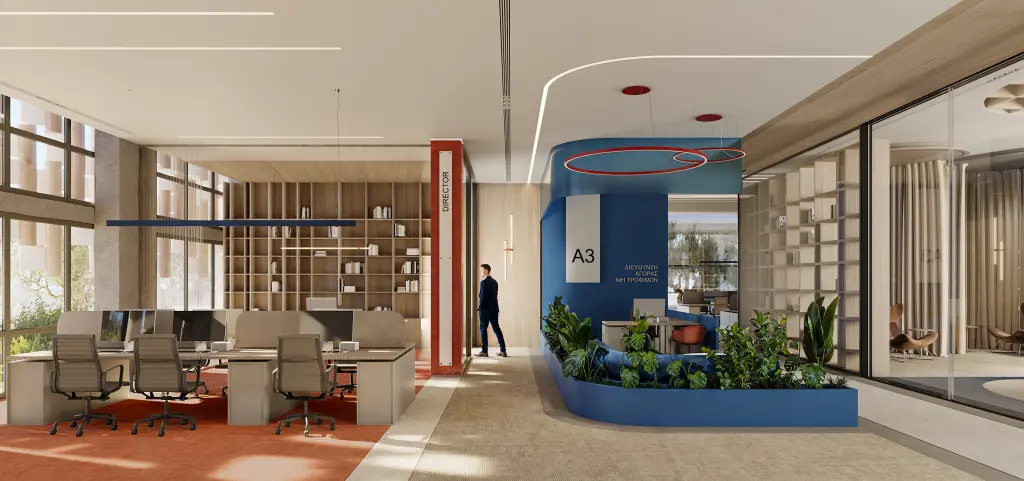
Flows & Experience: Workspaces are woven into these oases, generating dynamic spatial flows and immersive daily experiences for both employees and management.
Identity: The oases embody a unified collective identity—spaces that cultivate a strong sense of belonging.
Vitality: These cellular oases operate as the living structures of an organic system in which nature, materiality, and human activity interact seamlessly.
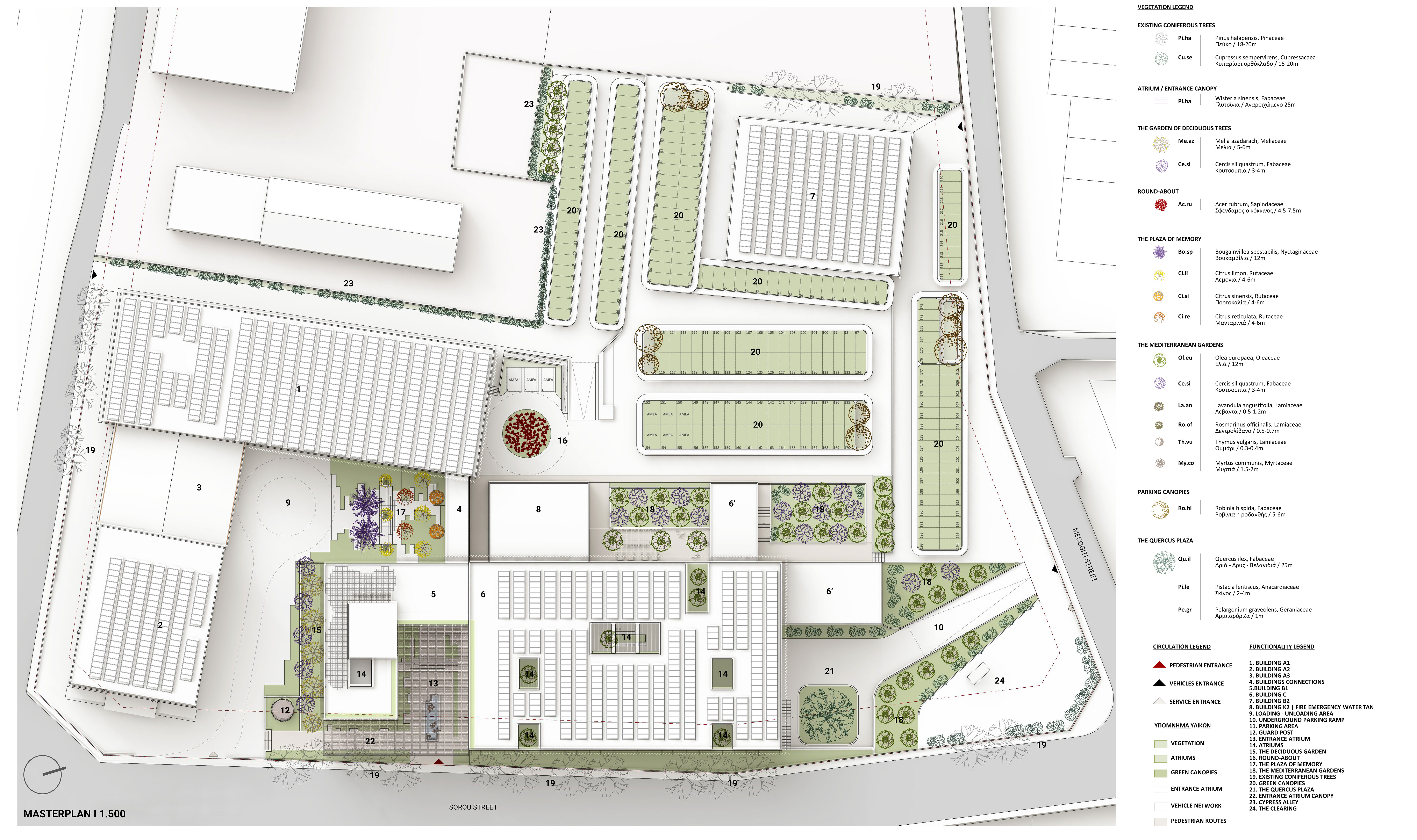
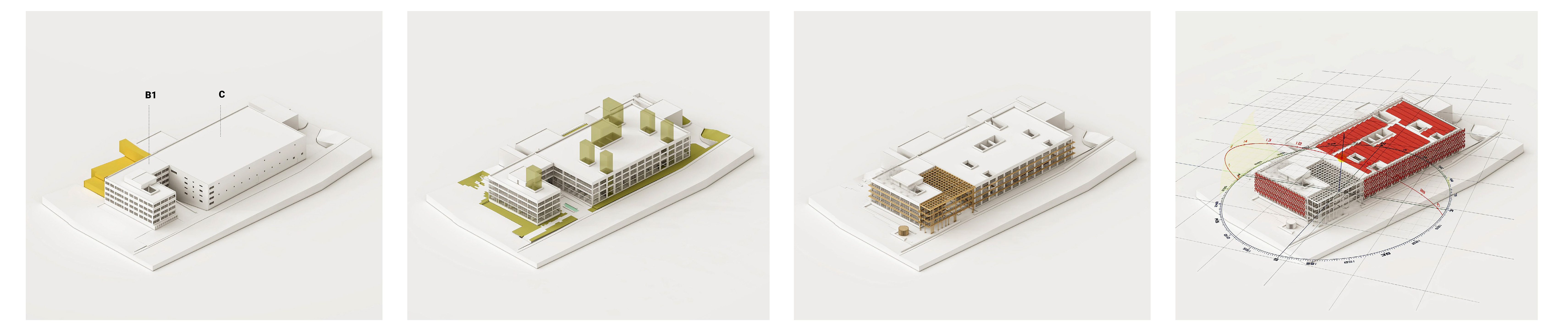
TRADITION - STRUCTURE Given that the notion of tradition constitutes a core pillar of METRO S.A.’s corporate identity, the existing building complex (Blocks B1 and C) can operate as the structural foundation for a meaningful value-driven connection between past and future. Conceptually, it forms the bridge between the company’s strategic framework and its people, aligning heritage with progress, innovation, sustainability, and technology. The buildings marked in yellow are proposed for demolition, while the fire-station complex with the water tower is preserved, along with the northern building which will accommodate the gym. The existing ramp leading to the basement is removed, making way for an expanded entrance plaza that enhances accessibility, visibility, and the overall arrival experience.
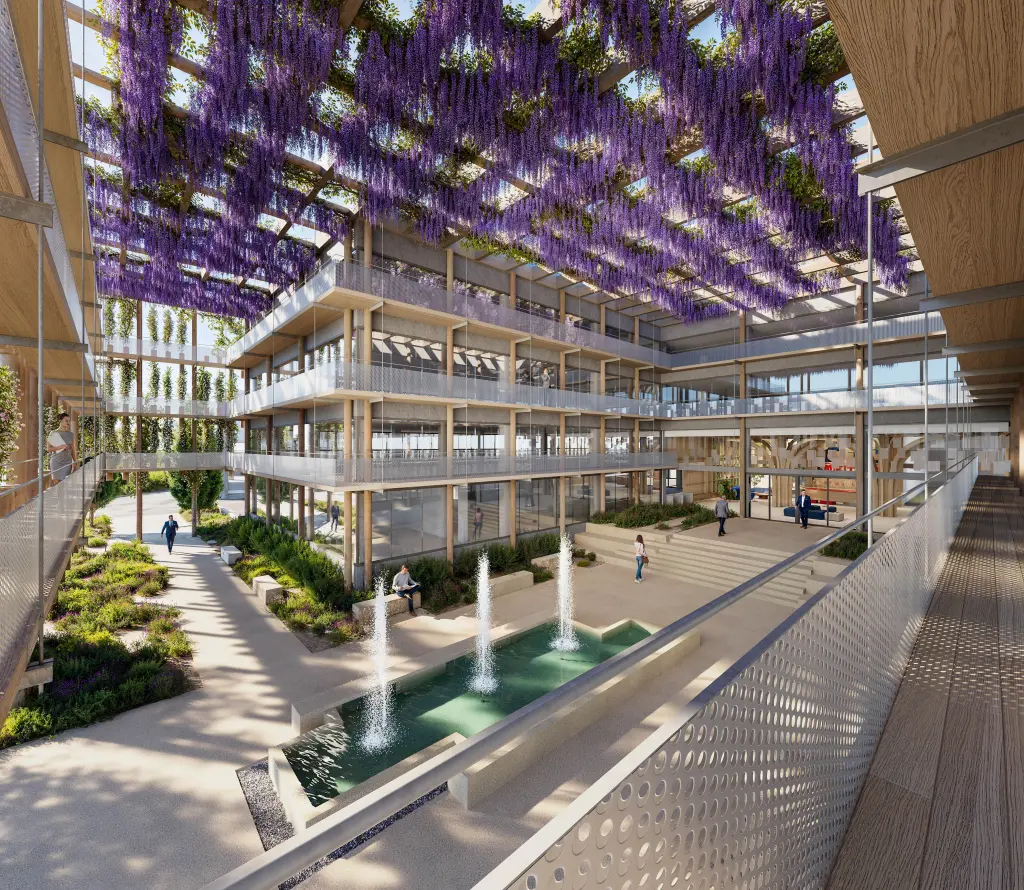
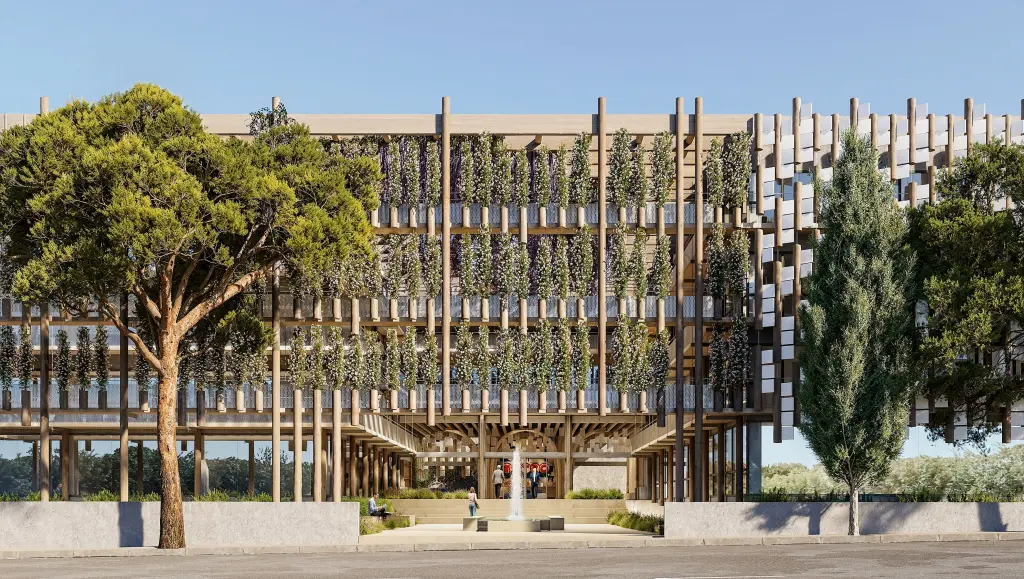
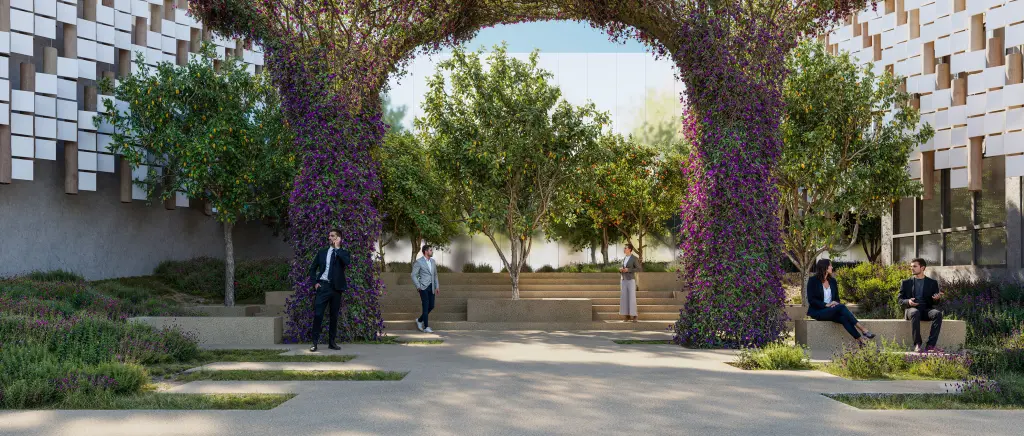
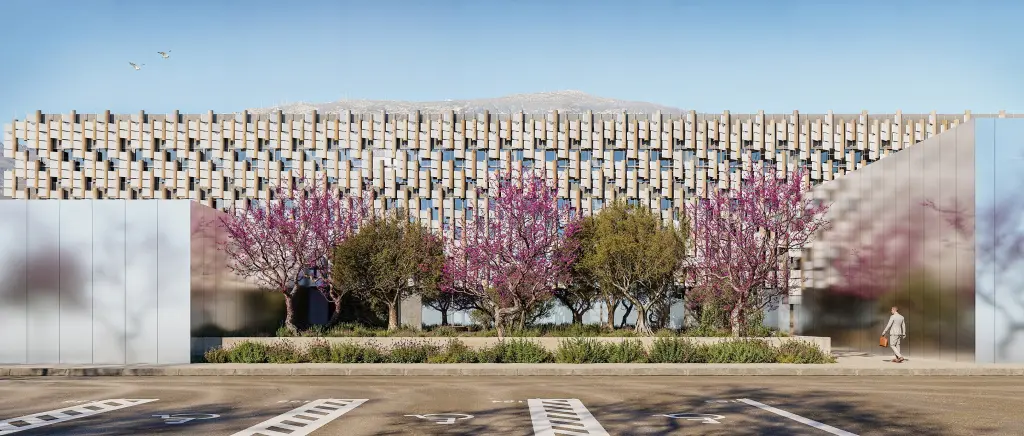

DIFFUSION - THE BUILDING AS A GREEN CAPACITOR The central design concept is the strategic subtraction of structural mass from the existing buildings under study, generating voids—green pockets within the architectural envelope—that act as cool oases and enhance the microclimate of the interior spaces. These planted recesses, combined with vertical surfaces of climbing vegetation, improve natural ventilation and daylight penetration while simultaneously functioning as zones of visual and thermal comfort throughout the complex. The internal courtyard and the landscaped atria are organized as integral components of the daily working experience, strengthening employees’ connection with the natural environment and providing spaces for social interaction, calmness, and wellbeing. SUSTAINABILITY - BIOCLIMATIC ENVELOPE The new inset timber bioclimatic envelope is positioned 90 cm away from the existing façades and plays a critical role in dissipating long-wave radiation, enhancing the vertical airflow and acceleration of warm air, and thereby contributing to the passive cooling of the building surfaces. Its structural configuration on the southeast elevation wraps around the entrance atrium, forming vertical planted façades. This system operates both as an acoustic buffer—reducing noise infiltration—and as a living, breathing organism capable of interacting with environmental conditions. Through this dual function, it enhances the complex’s energy performance by protecting the façades from overheating and reducing the overall thermal load.
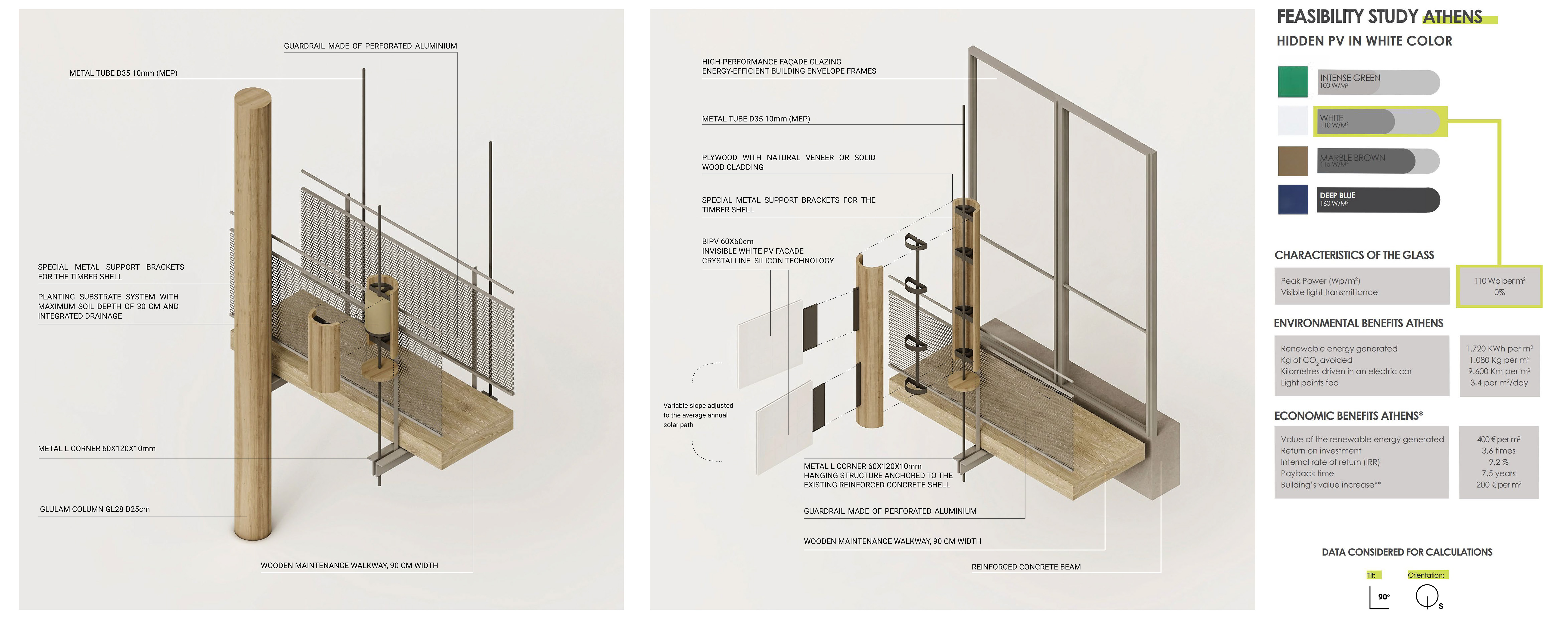
TECHNOLOGY - SOLAR SHELLS The photovoltaic units, measuring 60×60 cm, are installed with a variable tilt calibrated to the average annual solar path, maximizing energy capture while simultaneously reducing direct solar gain within the building throughout the day. Their integration into the timber bioclimatic envelope is combined with real-time energy-performance monitoring systems (smart façade monitoring), enhancing the interactive relationship between the envelope and its environmental conditions. The geometry and material expression of the system introduce a contemporary and technologically advanced character, while the repetitive array of photovoltaic modules creates a dynamic architectural pattern that evolves continuously throughout the day as light conditions change. THE VERTICAL VEGETATION SYSTEM The construction of the vertical columns is proposed to be made of glued laminated timber (glulam). The planter units are formed by two semicylindrical sections (2 × 180°), which are assembled around a circular steel shaft with a diameter of 35 mm. The material proposed for their fabrication is marine-grade plywood, clad either with natural wood veneer or tree bark. Each planter includes an internal, closed drainage system—following the principles of a vertical garden—with a maximum soil substrate depth of 30 cm. The selected planting consists of climbing, evergreen species, such as honeysuckle, which is non-invasive and can climb up to 2 m, creating a spatially dynamic façade.
THE BIOCLIMATIC ENVELOPE An alternative proposal for the construction of the cylindrical elements is the use of thermally treated, weather-resistant timber (Accoya/Thermowood). The main advantage of the cylindrical wooden components is that they maintain sufficient internal clearance for routing cabling and accommodating the suspension mechanisms of the solar cells. The system is lightweight and allows for full off-site prefabrication of all components while ensuring absolute geometric precision and the possibility of concealed fixings within the interior. The solar cells have dimensions of 60 × 60 cm and are manufactured from specialized white high-performance composite units, whereas on façades where solar exposure is not suitable (e.g., the northern side), the system continues with white aluminium panels of matching configuration.
SOLAR SHELLS During the reconfiguration of the existing photovoltaic units on the building rooftops, a deficit of –918 m² is observed. The proposed panels on the SE, SW and N façades of Buildings Γ and B1, as well as on the Eastern façade of Building A1, provide a total surface area exceeding 1,600 m². With a coverage factor of 75%, the required photovoltaic area is fully met.